One Thousand White Women, Jim Fergus
In 1854 the Cheyenne tribe and the U.S. government met to negotiate a peace treaty. Among the Cheyenne requests was that the United States give them one thousand white women as wives. The request was not in jest; the tribe believed that a child belonged to its mother's clan, so the children of these unions would help to integrate the Cheyenne and the whites. Naturally, the government rejected the request.
In this novel, Jim Fergus wonders what would have happen if they hadn't. The book is told from the point of view of May Dodd, a white woman who becomes part of the government's clandestine "Brides for Indians" program. The book flounders a little initially as the author tries to make the program seem plausible, but once the background ends and we meet the brides the novel is absorbing. The women in the program are all fascinating characters, and May's observations as she adjusts to her new life are both honest and often heart wrenching. Reading this book didn't really make me wonder what would have happened if the thousand white women had existed, but it did make me think about how different things could have been between the whites and the Native Americans in those turbulent decades when the white pioneers headed west.
Borrowed from the library
Showing posts with label history. Show all posts
Showing posts with label history. Show all posts
Tuesday, August 9, 2011

Friday, July 22, 2011
My Obligatory Shuttle Retirement Post
I've been debating whether or not to post anything about the conclusion of the Space Shuttle program because I wasn't sure I had anything to add that hasn't already been said. That's still true, but I have seen so many beautiful tributes that I thought I'd show them here along with my thoughts.
Although I technically work for the International Space Station (ISS) program, not the shuttle program, my work has been very much tied to the shuttle as it brings up most of the equipment we install on Extravehicular Activities (EVAs aka spacewalks), and most US EVAs are conducted by the shuttle crew while the shuttle is docked to station. So although my job is safer than most, its nature had already begun changing by the time STS-135 landed. Instead of focusing on the next flight, I'll be working on preparing ISS for maintenance and for the new commercial vehicles. I'll miss the excitement of a shuttle mission and the camaraderie I developed with the crews and the rest of the team during the training and preparation for flight. The shuttle has been America's program in space for as long as I've been alive, and its absence leaves a real gap. What saddens me most though is not the fact that the shuttle program is ending, but rather the lack of a defined plan for NASA's next program. I worry that the longer it takes to establish a new program, the more knowledge will be lost and the less the public will support our next mission.
For now, let's take a moment to acknowledge all the amazing accomplishments of the last 30 years.
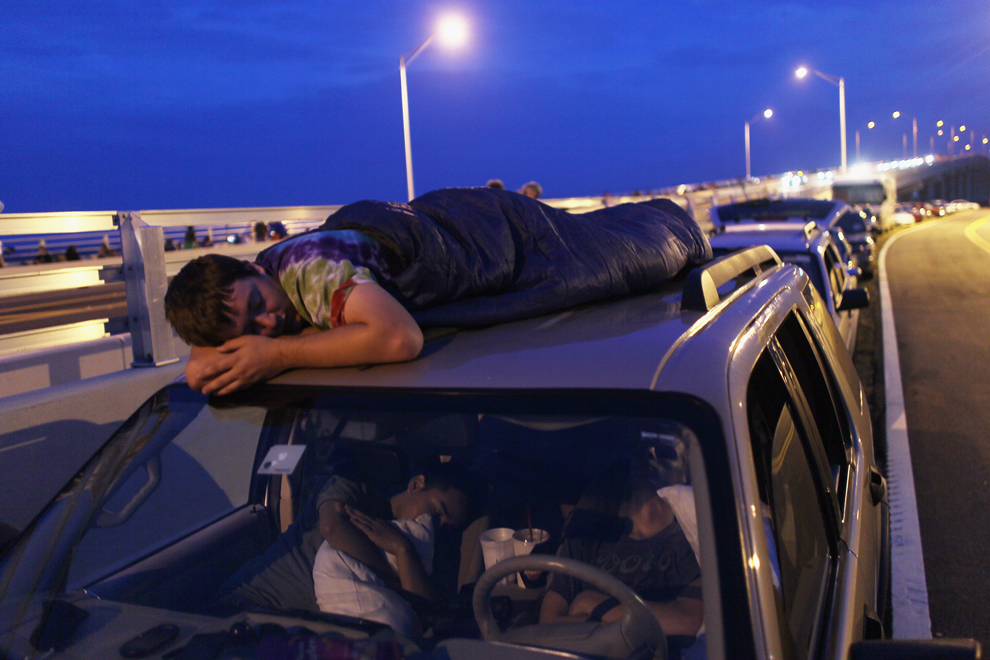
Take a moment to peruse a multitude of beautiful photos from The Big Picture. Notice how many people went to great lengths to see the final launch; clearly space is still inspiring!

Although I technically work for the International Space Station (ISS) program, not the shuttle program, my work has been very much tied to the shuttle as it brings up most of the equipment we install on Extravehicular Activities (EVAs aka spacewalks), and most US EVAs are conducted by the shuttle crew while the shuttle is docked to station. So although my job is safer than most, its nature had already begun changing by the time STS-135 landed. Instead of focusing on the next flight, I'll be working on preparing ISS for maintenance and for the new commercial vehicles. I'll miss the excitement of a shuttle mission and the camaraderie I developed with the crews and the rest of the team during the training and preparation for flight. The shuttle has been America's program in space for as long as I've been alive, and its absence leaves a real gap. What saddens me most though is not the fact that the shuttle program is ending, but rather the lack of a defined plan for NASA's next program. I worry that the longer it takes to establish a new program, the more knowledge will be lost and the less the public will support our next mission.

For now, let's take a moment to acknowledge all the amazing accomplishments of the last 30 years.
Take a moment to peruse a multitude of beautiful photos from The Big Picture. Notice how many people went to great lengths to see the final launch; clearly space is still inspiring!
And finally, here's excellent video with footage from every mission.
Wednesday, July 13, 2011
Unknown Game Changers
The Big Burn, Timothy Egan
This book tells the story of the formation of the Forest Service by Teddy Roosevelt and its first real test in a massive 1910 wildfire which destroyed much of Idaho and Montana. My dad recommended the book to me quite a while ago, but it sat quietly on my long "to read" list. However, once I visited the Grand Canyon and saw the massive amount of work completed thanks to Roosevelt's work, The Big Burn caught my eye again, and I'm glad it did.
The beginning is a little slow as Egan relates the circumstances which caused Teddy Roosevelt to begin championing the cause of conservation. It is mind boggling to imagine that were it not for him we could have strip mined the Grand Canyon and destroyed the forests in the Pacific Northwest. The pace picks up once the focus narrows on the dry summer of 1910 and the specific rangers, woefully short of resources, who were left to battle the three million acre blaze. The stories of their bravery and miraculous survival are as amazing as the destruction and death are disturbing. If you can make it through the first third, the story is well worth the read.
Borrowed from the library
This book tells the story of the formation of the Forest Service by Teddy Roosevelt and its first real test in a massive 1910 wildfire which destroyed much of Idaho and Montana. My dad recommended the book to me quite a while ago, but it sat quietly on my long "to read" list. However, once I visited the Grand Canyon and saw the massive amount of work completed thanks to Roosevelt's work, The Big Burn caught my eye again, and I'm glad it did.
The beginning is a little slow as Egan relates the circumstances which caused Teddy Roosevelt to begin championing the cause of conservation. It is mind boggling to imagine that were it not for him we could have strip mined the Grand Canyon and destroyed the forests in the Pacific Northwest. The pace picks up once the focus narrows on the dry summer of 1910 and the specific rangers, woefully short of resources, who were left to battle the three million acre blaze. The stories of their bravery and miraculous survival are as amazing as the destruction and death are disturbing. If you can make it through the first third, the story is well worth the read.
Borrowed from the library
Friday, April 15, 2011
A World At War
Fall of Giants, Ken Follett
I am a big fan of Ken Follett, both of his many WWII dramas and of Pillars of the Earth and World Without End. In Fall of Giants he manages to combine both styles of writing and I think it works wonderfully. Fall of Giants traces characters from England, Germany, Russia, and America from the lead up to World War I through the end of the war. It is a huge cast of characters but Follett manages to move between them such that the reader isn't confused but at the same time, still gets enough focus on each story to really care about the characters. For those who do read it, the characters who caught my attention most were Ethel Williams, Maud Fitzherbert, and Gus Dewar. I absolutely recommend this book for just about everyone...whether you enjoy it for the historical fiction, the characters, or just the chance to become absolutely absorbed in another world for a while. Fall of Giants is the first book of a trilogy and while I know I have years to wait for book two, I can't wait!
Note: This book is one that counts toward my efforts in the Chunkster Challenge. My goal was the "Mor-book-ly Obese" level, which requires 8 books of at least 450 pages, of which at least three are over 750 pages. So far I have read four over 450 (and reviewed two of them here and here) and this one is my first 750+. If you're interested in a long read, check out some of the other reviews!
I am a big fan of Ken Follett, both of his many WWII dramas and of Pillars of the Earth and World Without End. In Fall of Giants he manages to combine both styles of writing and I think it works wonderfully. Fall of Giants traces characters from England, Germany, Russia, and America from the lead up to World War I through the end of the war. It is a huge cast of characters but Follett manages to move between them such that the reader isn't confused but at the same time, still gets enough focus on each story to really care about the characters. For those who do read it, the characters who caught my attention most were Ethel Williams, Maud Fitzherbert, and Gus Dewar. I absolutely recommend this book for just about everyone...whether you enjoy it for the historical fiction, the characters, or just the chance to become absolutely absorbed in another world for a while. Fall of Giants is the first book of a trilogy and while I know I have years to wait for book two, I can't wait!
Note: This book is one that counts toward my efforts in the Chunkster Challenge. My goal was the "Mor-book-ly Obese" level, which requires 8 books of at least 450 pages, of which at least three are over 750 pages. So far I have read four over 450 (and reviewed two of them here and here) and this one is my first 750+. If you're interested in a long read, check out some of the other reviews!
Monday, April 11, 2011
Quiet Bravery
Every Man Dies Alone, Hans Fallada
This extraordinary novel was written in only 24 days by the author who survived Nazi Germany. It is loosely based on the story of Otto and Elise Kempel, a couple in Berlin who quietly dropped anti-Nazi postcards throughout the city at risk of their lives. In the novel, they become Otto and Anna Quangel. When their son is killed in the war, Otto and Anna realize they no longer believe in Hitler and feel they must act against him. Each postcard they drop could bring a death sentence. In my opinion, the book's strength lies not just in its portrayal of Otto and Anna, but in its ability to examine the psyche of many people, from the Jewish widow living upstairs to the SS officer investigating the postcards. As the novel progresses you are forced to see the many compromises and wrenching decisions people made during the dangerous times. The novel amazingly manages to combine a psychological examination with an action filled plot. I found the afterword about the author to be as interesting as the book itself; don't stop reading at the last page!
Note: This book is one that counts toward my efforts in the Chunkster Challenge. If you're interested in a long read, check out some of the other reviews!
This extraordinary novel was written in only 24 days by the author who survived Nazi Germany. It is loosely based on the story of Otto and Elise Kempel, a couple in Berlin who quietly dropped anti-Nazi postcards throughout the city at risk of their lives. In the novel, they become Otto and Anna Quangel. When their son is killed in the war, Otto and Anna realize they no longer believe in Hitler and feel they must act against him. Each postcard they drop could bring a death sentence. In my opinion, the book's strength lies not just in its portrayal of Otto and Anna, but in its ability to examine the psyche of many people, from the Jewish widow living upstairs to the SS officer investigating the postcards. As the novel progresses you are forced to see the many compromises and wrenching decisions people made during the dangerous times. The novel amazingly manages to combine a psychological examination with an action filled plot. I found the afterword about the author to be as interesting as the book itself; don't stop reading at the last page!
Note: This book is one that counts toward my efforts in the Chunkster Challenge. If you're interested in a long read, check out some of the other reviews!
Tuesday, March 22, 2011
Historically Hardcore
With all the distractions in the world, it can be hard to get kids (and even adults) excited about going to a museum, which is why I think these ads for the Smithsonian are so amazing. What's even more amazing is that they were created for a class and that the Smithsonian asked their logo to be removed. I think the museums need to hire the talented designers (Jenny Burrow and Matt Kapler) who created these ads!


Subscribe to:
Posts (Atom)